









.png)







Since the Maya made cacao drinks from cocoa beans, chocolate has come in countless varieties. Yet for real chocolate, cocoa butter—the key ingredient—is what shapes its texture and unique flavor profile.
Cocoa butter is triglyceride containing three fatty acids: oleic acid (35%), stearic acid (34%) and palmitic acid (26%), corresponding to C18:1, C18:0 and C16:0.
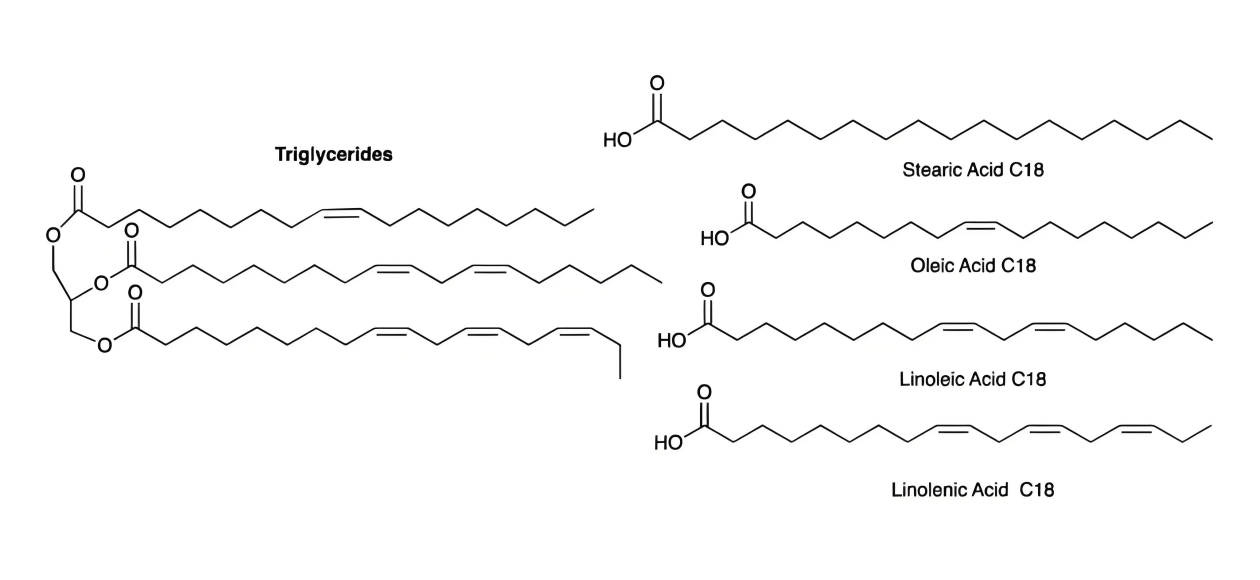
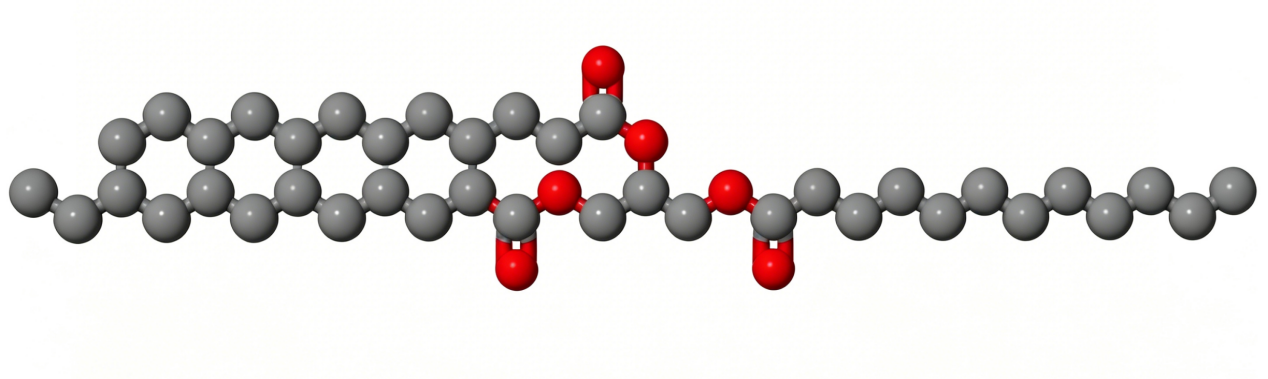
Compared with other oils and fats, cocoa butter features simple carbon chains in its fatty acids. This explains why real cocoa butter chocolate melts effortlessly on your tongue instead of leaving a waxy, bland aftertaste.
However, variations in fatty acid composition and differing esterification positions of these fatty acids create distinct molecular conformations of fats, which in turn form different fat crystals. Cocoa butter is a polymorphic substance containing multiple crystal forms that can interconvert with one another.
For a long time, chocolate tempering has been understood as the transformation between different crystal forms in cocoa butter’s polymorphic system, which forms stable Cocoa Butter β crystals. However, in contrast to chocolate’s long consumption history, in-depth theoretical research on chocolate crystals, phase changes and tempering only began recently.
In 1956, researcher Becker first proposed that the fat bloom appearing on chocolate during storage forms when low-melting-point triglycerides (POO: 1-palmitoyl-2, 3-dioleoyl-sn-glycerol and SOO: 1-stearoyl-2,3-dioleoyl-sn-glycerol) separate out from high-melting-point triglycerides (POP, POS, SOS) within the crystalline structure. This scientific hypothesis pioneered research into chocolate tempering, yet it was put forward 70 years ago. Five years later, another researcher Kleiner disproved this theory.
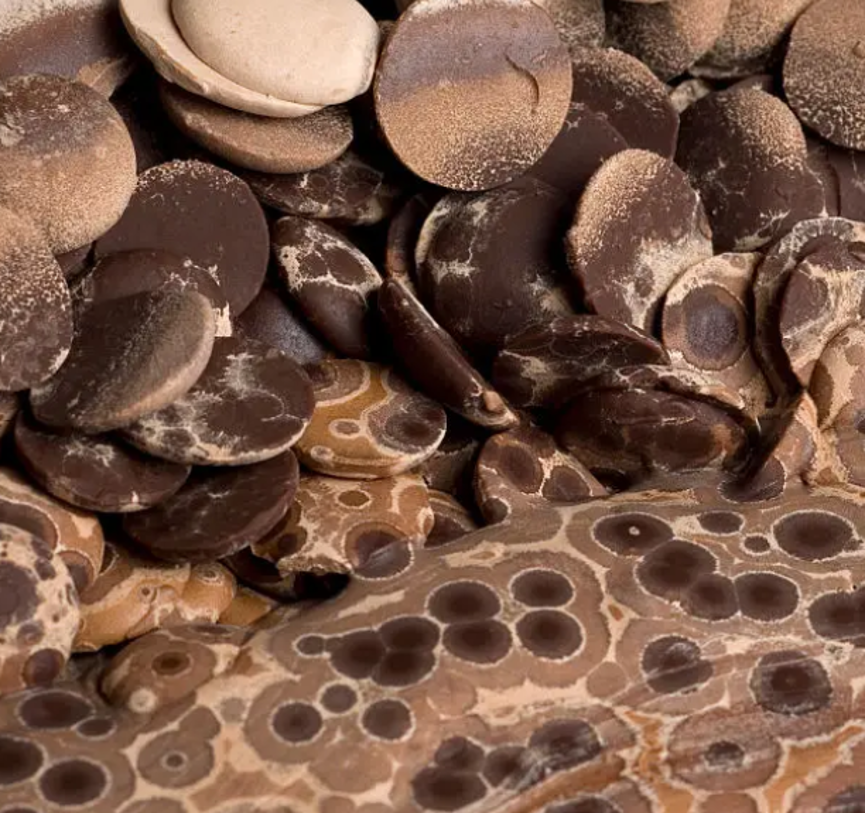
Over the past 70 years, scientific research on cocoa butter crystals and phase transitions has developed slowly. New discoveries keep emerging, yet many are soon disproven. No undisputed core theory of chocolate tempering has gained agreement among food chemists so far.
On the manufacturing, consumer and even social media fronts, however, everyone acts like a technical guru who claims to know tempering inside out and master it effortlessly. Some rub chocolate on marble slabs, heat and cool it a little, then call themselves chocolate experts who fully grasp tempering techniques.
Chocolate crafting relies more on experience than complex science; long practice makes seasoned operators. Yet experience cannot replace science, even if research builds on experience.
Tempering is mostly a black-box (or gray-box) process: operators only care about inputs and outputs, with just a basic grasp of interconvertible cocoa butter crystal forms that retain unchanged chemical makeup.
Old theories fail to explain the long-standing key issues of fat bloom and microstructural changes. Traditional tempering theories center merely on crystallization.

Findings published by the American Chemical Society in 2025 reveal:
During the early stage of crystal formation, stable heat-resistant crystals can be generated by introducing specific molecular interactions, requiring only limited temperature cycles without shear force. Chocolate crystallization is a multiscale phenomenon that covers the entire sequence, ranging from molecular interactions and primary nucleation, supramolecular and nanoscale ordered arrangements, all the way to the formation of microstructures. This highlights the critical value of the crystallization process itself, rather than merely the final crystal polymorph.
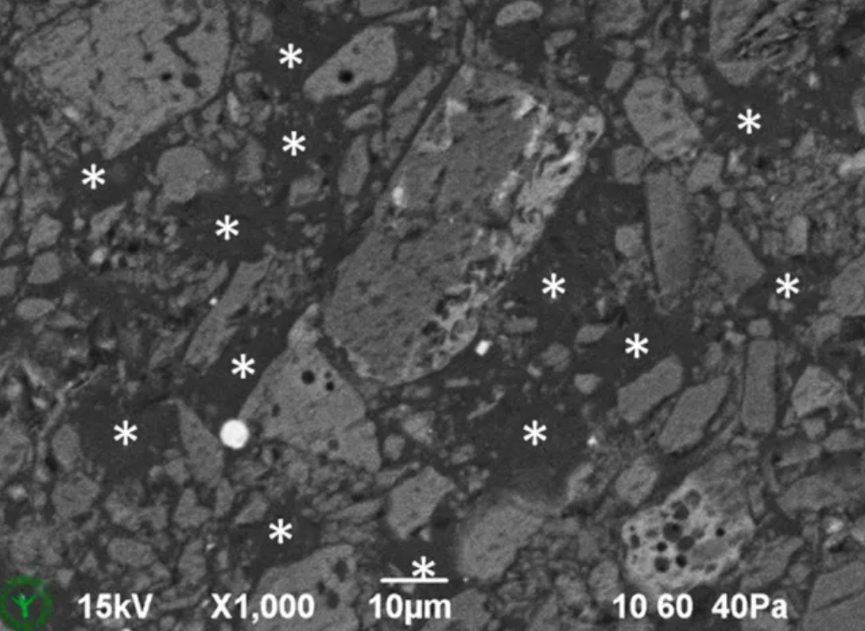
This research concludes that the conventional theory of cocoa butter polymorphic systems only accounts for part of chocolate quality. Features ranging from nanostructures to microstructures serve as the key indicators that determine chocolate’s susceptibility to fat bloom.
Even chocolates fully tempered into stable βcrystals by any tempering machine, or hand-tempered to seemingly perfect standards, will still suffer fat bloom in storage and on shelves. This frontier theory accounts for this common issue.
This theory also provides guidance and insights for evaluating cocoa butter quality. In the years following the cocoa bean supply crisis, raw material shortages and soaring prices have driven cocoa processors to extract every last bit of cocoa butter from beans. This practice has created a new challenge: degraded cocoa butter quality with elevated phospholipid levels.
Shifts in lipid composition alter the rheological and kinetic properties of cocoa butter, bringing risks to techniques and equipment designed around traditional tempering theories—chocolate becomes far more prone to fat bloom. Fluctuations in both major and minor lipid fractions modify nucleation rates, either speeding up, slowing down, or disrupting crystal formation. This leads to larger, agglomeration-prone crystals and unstable microstructures, which macroscopically manifest as lipid migration, eventually causing fat bloom during long-term storage.
This theory also carries forward-looking implications: traditional long-standing tempering technologies were developed under conditions of stable cocoa quality and relatively consistent lipid compositions. Now confronted with dynamically fluctuating cocoa quality and variable lipid profiles, these conventional techniques risk becoming ineffective, which will compromise tempering performance in large-scale chocolate production.
It is therefore necessary to rethink and redesign tempering processes from a multiscale perspective, and develop innovative tempering technologies optimized for nanostructural and microstructural control.
Disclaimer: This article reflects only the author’s personal views and professional insights. All content is for general reference and academic popularization purposes only. It shall not be used for any commercial purposes, commercial promotion, product endorsement or commercial application scenarios. No responsibility shall be assumed for any direct or indirect losses arising from unauthorized commercial use.
Your Name*
Your Email*

.png)



.png)
